All software

Chemotion ELN
Chemotion ELN is an Open Source electronic lab notebook (ELN) for scientists working in chemistry and neighboring disciplines, developed mainly at Karlsruhe Institute of Technology (KIT). The web-based application allows the acquisition, management, storage, processing, and sharing of research data.
- Chemistry
- Electronic Lab Notebook
- Experimental Sciences
- + 2
- JavaScript
- Ruby
- SCSS
- + 5

ESMValCore
- Data analysis
- Earth & Environment
- FAIR Software
- + 2
- Python
- Jupyter Notebook
- HTML
- + 4
Multiphase Code Repository by HZDR for OpenFOAM Foundation Software
This software publication is released by Helmholtz-Zentrum Dresden-Rossendorf according to FAIR principles. It contains experimental research work for the numerical simulation of multiphase flows. The development is based on the open-source software released by the OpenFOAM Foundation.
- Computational Fluid Dynamics
- Energy
- Euler-Euler method
- + 5
hybridMT
The hybridMT is MATLAB/shell environment software package for the seismic moment tensor inversion in time domain. The package allows to estimate fault plane parameters and the balance between volumetric and non-volumetric strain in the seismic source using different decomposition schemes.
- Earth & Environment
- moment tensor
- seismology
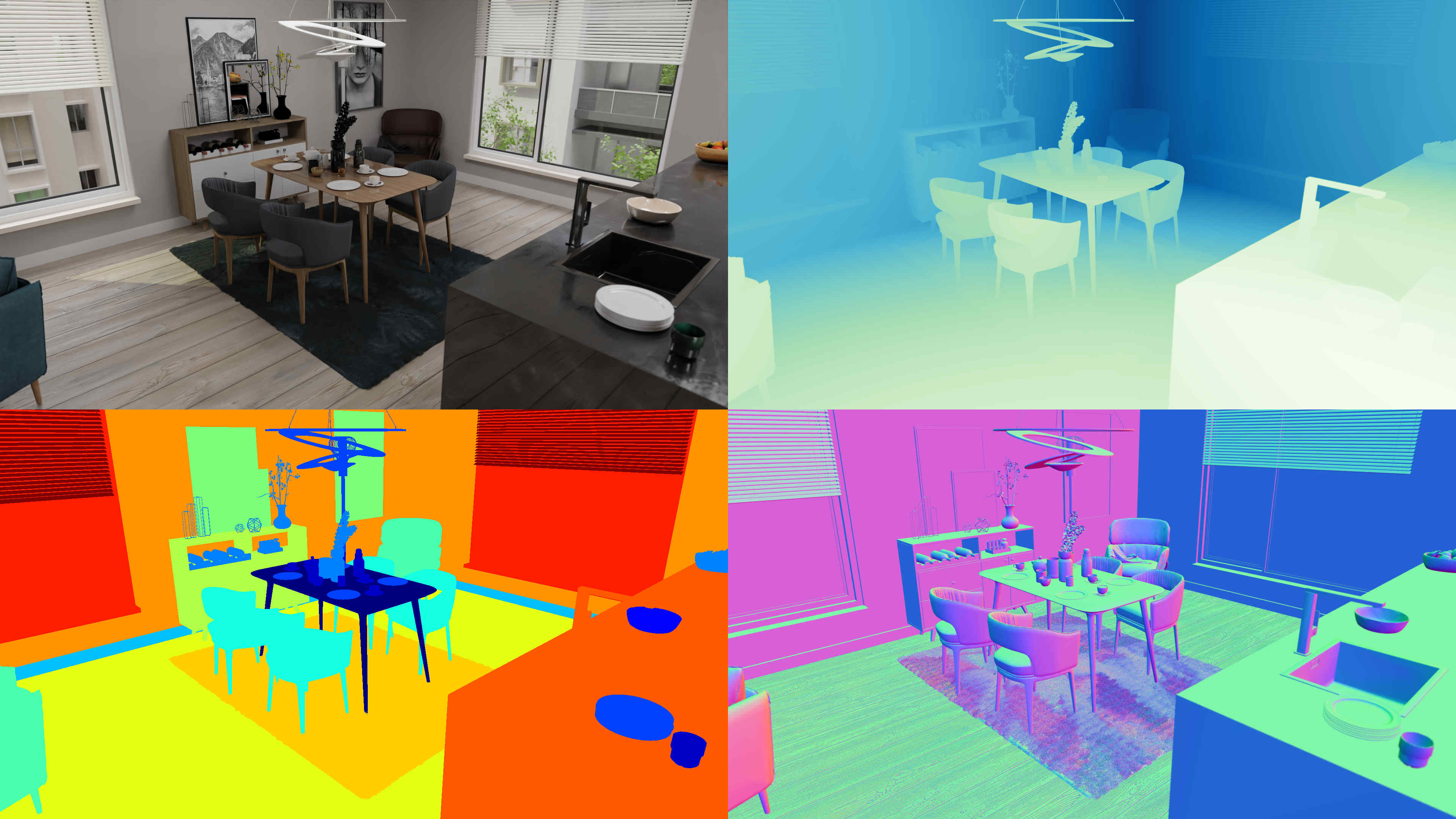
BlenderProc
A procedural Blender pipeline for photorealistic training image generation
- Blender
- Dataset creation
- Indoor Scene
- + 4
- Python
- TeX

BornAgain
Software to simulate and fit neutron and x-ray reflectometry and grazing-incidence small-angle scattering. The latter is computed as usual, using the distorted-wave Born approximation, hence the name. Users can set up arbitrary multilayer samples with interface roughness and embedded nanoparticles.
- Data analysis
- Modelling
- Photon and neutron science
- + 1
- C++
- Python
- CMake
- + 2
BrainPrint
Our BrainPrint tools provide shape descriptors of neuroanatomical structures and require a FreeSurfer or FastSurfer segmentation as a pre-processing step. BrainPrint is based on “ShapeDNA” a spectral shape descriptor.
- Data analysis
- MRI
- open source
- + 1
- Python

Kadi4Mat
Kadi4Mat is a generic and open source virtual research environment.
- Aeronautics, Space and Transport
- Earth & Environment
- Electronic Lab Notebook
- + 9
- Python
- Vue
- HTML
- + 2

alpaka
The alpaka library is a header-only C++17 abstraction framework designed for computing accelerator development. It enables developers to implement algorithms once and execute them across a range of platforms, including x86, ARM, and RISC-V CPUs, as well as accelerators from NVIDIA, AMD, and Intel.
- C++
- CPU
- CUDA
- + 7
- C++
- CMake
- Shell
- + 1

Ginkgo
Ginkgo is a high-performance math library for the solution of sparse linear systems on GPUs (AMD, Intel, NVIDIA). Ginkgo is implemented using modern C++ and provides preconditioned Krylov solvers, multigrid, sparse direct solvers, mixed precision, and batched functionality.
- GPU
- High performance computing
- Large linear equation system
- + 4
- C++
- CMake
- Cuda
- + 4

Trixi.jl
Trixi.jl is a numerical simulation framework for conservation laws written in Julia with an extensible design with a fast implementation, Trixi.jl is focused on being easy to use for new or inexperienced users, including the installation and postprocessing procedures.
- CFD
- Earth & Environment
- hpc
- + 3
- Julia
- Jupyter Notebook
- Shell
- + 2

oemof.solph
oemof.solph is a model generator for energy system modelling and optimisation. It facilitates the formulation of (mixed-integer) linear programs from a generic graph-based structure, allowing to create multi-sector models on different levels of detail with user-defined time-resolution.
- Energy
- Energy System Analysis
- ESD
- + 2
- Python