Ctrl K

Kinora

A Blender Add-on for visualising pedestrian simulation and experimental trajectory data

2
contributors
226 commitsLast commit ≈ 1 month ago0 stars0 forks

Description

Lint Blender Addon CI

A Blender Add-on for visualising pedestrian simulation and experimental trajectory data.
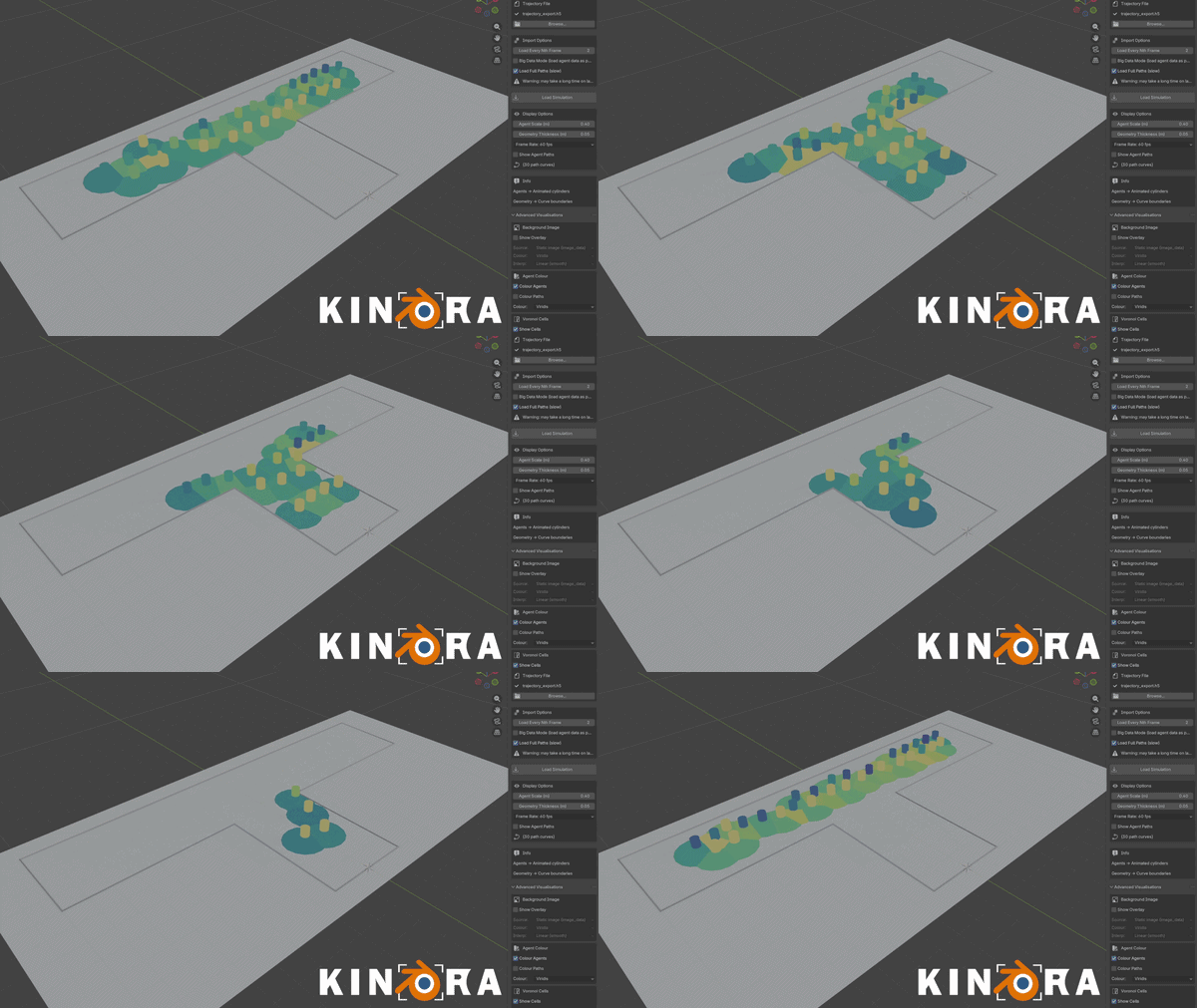
Addon Preview

Install

  1. Download the latest ZIP from Releases.
  2. In Blender (4.0 or newer): Edit > Preferences > Add-ons > Install... and pick the ZIP.
  3. Tick the box next to Kinora.
  4. Expand the addon and click Install Dependencies (give it a minute or two).
  5. Restart Blender.

Run Blender as your normal user, not as Administrator or root. If something goes wrong, see DEVELOPER.md.

Load a simulation

  1. In the 3D Viewport, press N to open the sidebar.
  2. Open the Kinora tab.
  3. Click Browse... and pick your SQLite or HDF5 trajectory file.
  4. Click Load Simulation.

Agents and walkable geometry appear in the scene, with the timeline set to match the simulation.

For big simulations, tick Big Data Mode or set Load Every Nth Frame to something above 1.

More

License

MIT.

Acknowledgments

Logo of Kinora
Keywords
Programming language
  • Python 100%
License
</>Source code

Reference papers

Contributors

Fabian Plum
Core Developer / Maintainer
Forschungszentrum Jülich
Mohcine Chraibi
Mohcine Chraibi
Supervisor
Forschungszentrum Jülich

Helmholtz Program-oriented Funding IV

Related software

JuPedSim

JU

JuPedSim is a framework designed to support students and researchers in investigating pedestrian dynamics and conducting research related to the development and validation of new models or model features. It enables the analysis of experiments and facilitates the proper visualization of results.

Updated 35 months ago
7 4

PedPy

PE

PedPy is a Python library for the analysis of pedestrian movement data.

Updated 35 months ago
12 3

PeTrack

PE

PeTrack (Pedestrian Tracking) automatically extracts accurate pedestrian trajectories from video recordings (calibration, recognition, tracking). Individual codes enable personalized trajectories with static information of each participant. With ML techniques also markerless tracking is possible.

Updated 3 weeks ago
547 21