All software
Materials Learning Algorithms
MALA (Materials Learning Algorithms) is a data-driven framework to accelerate electronic structure calculations based on machine learning. Its purpose is to construct neural-network surrogate models for bypassing computationally expensive steps in state-of-the-art density functional simulations.
- Density functional theory
- electronic structure
- machine-learning
- + 2
- Python
- Fortran
- Shell
- + 1

CryoGrid
The CryoGrid Model Suite provides a set of numerical tools for simulating the thermal soil regime and the ice-water balance for permafrost and glaciers. Depending on the application needs different model tools are offered, characterized by different levels complexity and modularity.
- Climate
- Earth & Environment
- Modeling
- + 1
- MATLAB
- HTML
- Mercury
- + 2
CoMOLA
CoMOLA is a python tool for optimal spatial allocation of land uses. The tool creates optimal land-use maps for up to four objectives. It takes into account constraints and can be coupled with external models to evaluate different objectives (e.g. ecosystem services/biodiversity models)
- land-use allocation
- multi-objective optimization
- NSGA-II
- Python
- R

GSTools
GSTools is a Python-based software suite for solving a wide range of geostatistical problems. GSTools provides methods for generating different classes of correlated random fields; it can perform kriging, variogram estimation and much more.
- covariance-model
- geospatial
- geostatistics
- + 7
- Python
- JavaScript
- CSS
- + 1
BlenderProc
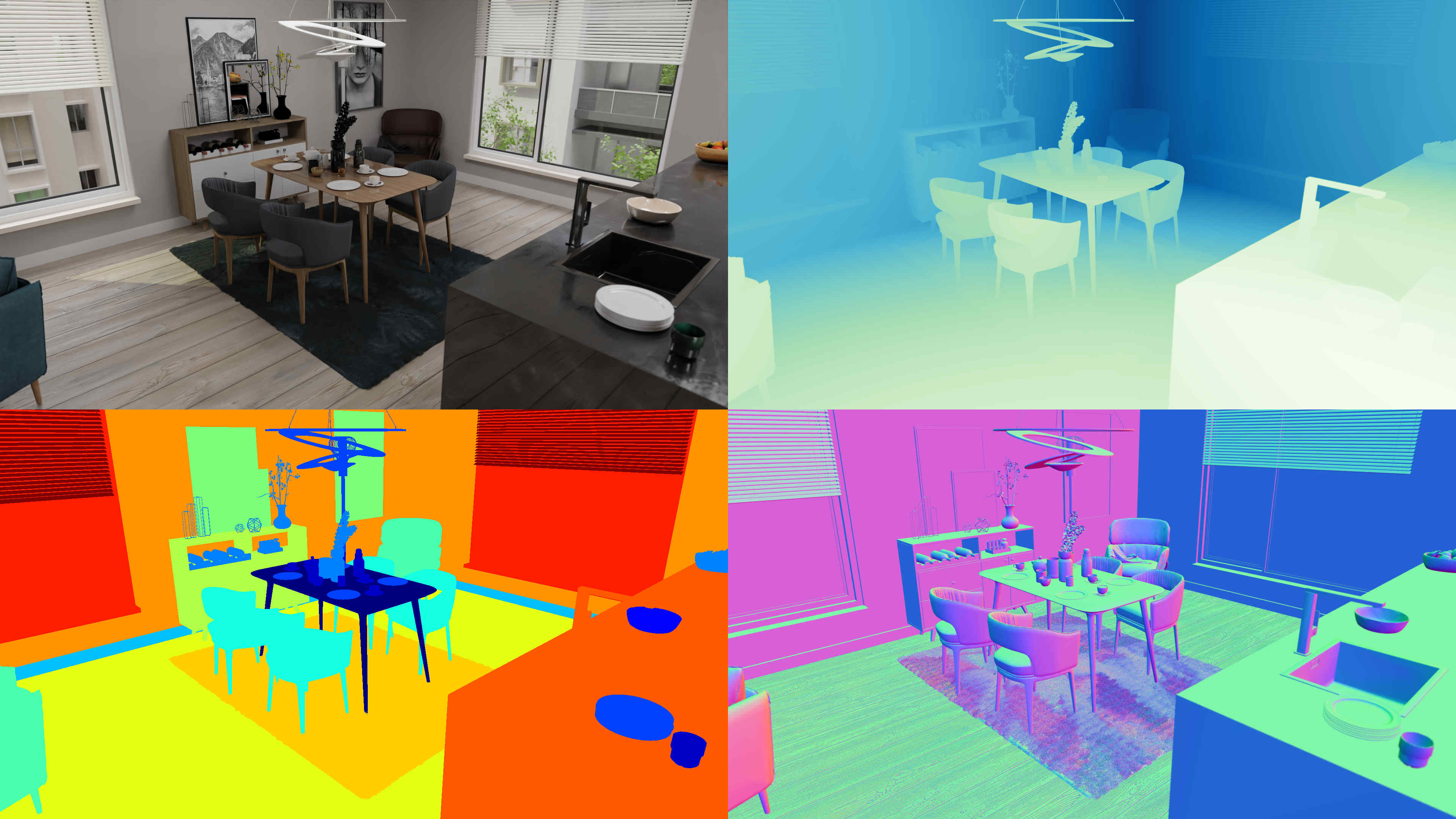
A procedural Blender pipeline for photorealistic training image generation
- Blender
- Dataset creation
- Indoor Scene
- + 4
- Python
- TeX

CellDetection
An open-source Python package, offering advanced AI methods for the identification and segmentation of biomedical objects, such as cells, in image data. Includes trained models that work out-of-the-box for a wide range of use cases.
- cell counting
- cell detection
- cell segmentation
- + 9
- Python
- Dockerfile

JURASSIC
The Juelich Rapid Spectral Simulation Code (JURASSIC) is an open source, high performance infrared radiative transfer and retrieval model for atmospheric remote sensing applications.
- Atmospheric science
- Climate
- Earth & Environment
- + 7
- C
- Python
- Shell
- + 2
Spex
Spex is a computer code based on many-body perturbation theory and is part of the FLEUR code family. It uses the full-potential linearized augmented plane-wave method (FLAPW), which provides an accurate basis set for all kinds of materials including transition metals, oxides, and f-electron systems.

SpatialData framework
SpatialData is an open and interoperable data framework for ingesting, representing, processing and visualizing spatial omics datasets.
- Data Visualization
- FAIR Data
- Multi omics
- + 3
- Python
- Dockerfile

FlexiGIS
FlexiGIS is a software tool for processing and analysing GIS-based data to design urban energy systems. Models developed with FlexiGIS enable the exploration and assessment of flexibility options in cities.
- Data analysis
- Energy
- Energy planning
- + 4
- Python
- Makefile

GOLEM
GOLEM is a modelling platform for thermal-hydraulic-mechanical and non-reactive chemical processes in fractured and faulted porous media, based on the MOOSE framework
- Earth & Environment
- Multiphysics of porous fractured rocks
- reservoir behaviour and induced seismicity
- + 1
- C++
- SWIG
- Assembly
- + 5

pycomlink
A python toolbox for deriving rainfall information from commercial microwave link (CML) data.
- precipitation estimation
- python
- rainfall
- + 2
- Python